storm
Austin Roof Hail Damage: A Contractor Guide to Claims
Nighthawk Crew · Sep 4, 2026
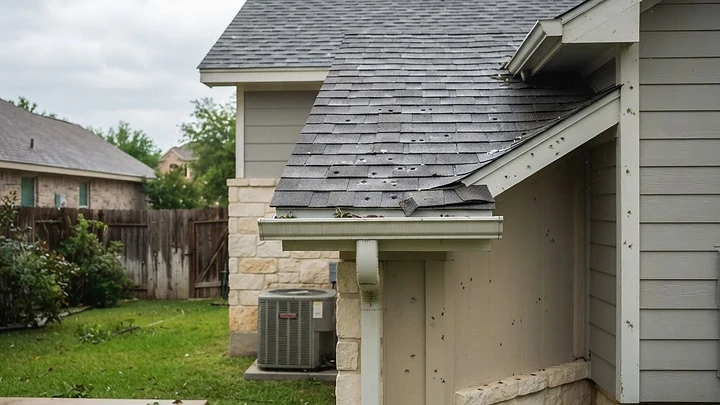
Identifying Hail Damage on Austin Roofs
Central Texas storms frequently bring severe hail and high winds. Homeowners in neighborhoods across Circle C Ranch, Mueller, and Steiner Ranch often step outside after a storm and look at their roofs from the driveway. Driveway inspections miss critical damage.
Hail impact marks on asphalt shingles present as dark, soft spots where the protective ceramic granule layer has fractured. Hail stones fracture the fiberglass mat beneath the asphalt. These fractures expose the bitumen core to UV rays, accelerating rot and water intrusion. September and late spring supercells routinely drop quarter-sized hail across the Travis County corridor.
Check ground-level collateral indicators first. Examine downspouts, window screens, siding, and air conditioning condenser coils. When soft metal components show dents and gouges, your roof shingles took the exact same impact. Granules washing out of downspouts into gutters provide secondary proof of impact stress.
The Insurance Adjuster Process in Central Texas
Under Texas Insurance Code and standard Texas homeowner policies, property owners typically have one year from the storm date to report damage. Failing to report damage within this timeframe voids your coverage for that event. Insurers classify hail as a sudden covered loss. Insurers do not cover deferred maintenance, sun blistering, or gradual thermal cracking.
Insurance adjusters evaluate damage by marking off a ten-foot by ten-foot square on each directional slope of the roof. They count the number of bruised shingles inside this test square. When eight to ten distinct hail strikes sit within that area, the insurer classifies the slope as compromised. Damage on multiple slopes leads to a full replacement approval rather than a partial repair patch.
Schedule a licensed exterior professional before calling your insurer. Independent contractors run an itemized assessment and meet the insurance adjuster directly on your roof. Having a contractor walk the roof alongside the adjuster ensures the adjuster logs bruised ridge caps, torn flashings, cracked pipe boots, and damaged gutters. You can calculate your potential out-of-pocket costs using our /cost-estimator before filing.
Class 4 Impact-Resistant Shingles and Local Building Code
When replacing an asphalt roof in Austin, install Class 4 impact-resistant shingles. Materials like GAF Timberline HDZ with ArmorShield or CertainTeed NorthGate SBS modified shingles resist severe hail impacts. The UL 2218 Class 4 test drops a two-inch steel ball onto the shingle twice from a height of twenty feet without cracking the shingle surface.
Austin adopted the 2021 International Residential Code (IRC). Section R908 requires full roof replacements to meet wind resistance standards up to 115 mph three-second gusts. Class 4 shingles feature modified asphalt blends that flex under thermal cycling and physical impact, preventing cracks during summer heat waves and winter freezes.
Texas insurers provide premium discounts ranging from 10% to 25% for homes with verified Class 4 roofs. Secure the roofing certificate from your contractor and submit Form TDI-42 to your insurance provider to lock in these annual savings. Review full roof replacement options at /services/roofing.
Protecting Your Exterior Envelope
Storms rarely limit damage to the shingle layer. Wind-driven hail damages siding panels and gutter hangers. Fiber cement systems like James Hardie Lap Siding offer superior structural resilience against debris impact compared to older wood or vinyl claddings. Examine your cladding joints, soffits, and fascia wraps after every severe weather event. See our wall envelope recommendations at /services/siding.
Homeowners in adjacent communities like Cedar Park and Round Rock face similar storm corridors. Our specialized teams cover these regional zones, which you can read about for /locations/78613-cedar-park. Ongoing seasonal upkeep prevents minor granule loss from progressing into interior ceiling water spots. Enrolling in an annual /protection-plan ensures your roof boots, seals, and flashings stay watertight year-round.
Schedule Your Forensic Roof Inspection
Do not wait for winter rains to expose hidden leaks caused by summer storms. Contact our team at /contact to arrange a complete forensic storm damage evaluation with an experienced project manager.