insurance
Austin Roof Insurance Claims: What Adjusters Miss
Nighthawk Crew · Sep 10, 2026

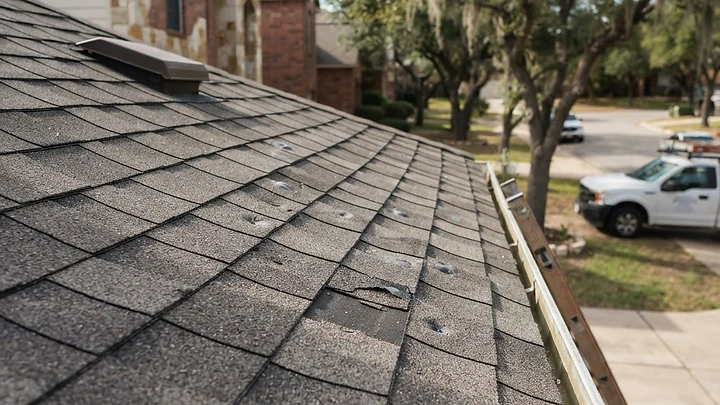
Central Texas homeowners regularly contend with severe spring hailstorms and destructive late-summer wind events. By September, roofing contractors across Travis and Williamson counties encounter hundreds of homeowners who received partial claim approvals or outright claim denials. Property owners often assume the insurance company's field adjuster documents every square foot of storm damage. Field adjusters typically work under intense quota pressures, inspecting five to seven properties per day. They miss critical storm-related failures on complex roof assemblies.
Navigating property damage requires an analytical understanding of how adjusters evaluate storm impact. Austin homeowners can protect their assets by knowing what adjusters look for, identifying overlooked components, and understanding local building codes.
The Standard Adjuster Inspection Method
Adjusters document hail damage using a test square methodology. The inspector marks a ten-foot by ten-foot square (100 square feet) on each accessible directional roof slope. Within this perimeter, the adjuster counts distinct hail strikes that broke the fiberglass mat or displaced surface granules.
Insurance carriers establish internal thresholds for total replacement approvals. Many Texas carriers require eight to ten verified strikes per test square to approve full replacement for that specific slope. If two or three slopes meet this count, carriers generally approve a full roof replacement under standard RCV (Replacement Cost Value) policies.
This system presents systemic flaws. Wind and hail strike roofs at erratic angles depending on local topography. In hilly neighborhoods like Westlake or Steiner Ranch, directional wind forces concentrate severe impacts on micro-elevations while shielding lower ridges. A rigid ten-by-ten box can easily sit three feet outside a heavy strike zone, resulting in a denied scope of work.
Critical Components Insurance Adjusters Frequently Miss
Field adjusters spend most of their time looking at the center of large asphalt shingle planes. They frequently overlook collateral structures and mechanical intersections that sustain severe physical damage.
Soft Metals and Penetrations
Granule loss on high-durability architectural shingles takes weeks of UV exposure to clearly reveal fiberglass fractures. Soft metals show impact immediately. Thin aluminum turtle vents, power attic exhaust caps, lead plumbing boots, and chimney caps record precise hailstone diameters. Adjusters often skip inspecting furnace flue caps and combustion air intakes, leaving dangerous ventilation restrictions unaddressed.
Drip Edge and Flashing Intersections
The International Residential Code (IRC), adopted with local amendments across Central Texas municipalities, mandates metal drip edge along roof eaves and rakes (IRC Section R905.2.8.5). Hail strikes bend drip edge metal, separating it from the underlying wood decking. Once this seal breaks, subsequent rainfall runs behind the metal fascia instead of routing into your seamless gutters. When storms strike neighborhoods from Cedar Park down to Buda, hail damages step flashing embedded behind siding walls. Adjusters rarely pull back trim to confirm compromised sidewall metal.
Valley Liners and Fastener Backouts
Valleys channel high volumes of rainwater runoff. Hail hits inside metal or modified bitumen valleys tear the waterproofing barrier beneath the shingles. Adjusters frequently skip these troughs due to safety line limitations on steep pitches. Furthermore, straight-line winds lift shingle tabs and back out pneumatic nails along the starter course. The shingle falls back down flat, looking intact from five feet away, yet the thermal seal strip remains broken.
Austin Building Codes Impacting Claim Scope
The City of Austin and surrounding Central Texas municipalities enforce strict building energy and structural codes based on the 2021 IRC. Insurers frequently issue repair estimates based on standard material minimums rather than local legal installation mandates.
Austin building code requires full ice and water shield self-adhering membranes in critical junctions, sealed roof decks under energy compliance rules, and specific ventilation ratios (1:150 or 1:300 with balanced intake and exhaust). If an adjuster writes an estimate that merely patches twenty shingles on a 15-year-old roof, the proposed repair often violates code requirements regarding material matching and brittle decking exposure. Central Texas summer heat bakes asphalt shingles, rendering older assemblies fragile. Prying up surrounding shingles to slide in a new tab causes immediate secondary breakage along the nail line, requiring an entire slope or system replacement.
Homeowners planning roof repairs or full system overhauls should consult our cost estimator to understand real-world material pricing for code-compliant residential systems.
Choosing Impact-Resistant Replacements
When a carrier approves a storm replacement claim, standard procedure reimburses for like-kind-and-quality materials. In Central Texas, replacing an impacted roof with standard builder-grade 3-tab or basic architectural shingles guarantees future storm damage.
Homeowners should allocate insurance claim proceeds toward Class 4 impact-resistant materials. The UL 2218 Class 4 rating indicates that a shingle can withstand repeated drops of a two-inch steel ball without cracking the backside of the shingle mat.
Industry-standard Class 4 options include:
- GAF Timberline HDZ with ArmorShield or Timberline AS II: SBS-modified asphalt construction absorbs severe impact energy.
- CertainTeed NorthGate ClimateFlex: Cold-weather flexibility and hail resistance engineered for extreme temperature swings.
- James Hardie fiber cement: Ideal protection for exterior siding surfaces frequently scarred by wind-driven hail alongside roofing components.
Beyond durability, the Texas Department of Insurance allows insurance carriers to offer property premium reductions between 10% and 30% for homeowners who install documented Class 4 impact-resistant systems. Calculate your potential exterior upgrade and evaluate your replacement budget before meeting your carrier's adjuster.
Steps to Take Before the Adjuster Walks Your Roof
- Secure an Independent Contractor Inspection: Never file a formal claim before a licensed professional roofer inspects your property. Unnecessary claims remain on your Comprehensive Loss Underwriting Exchange (CLUE) report even when the payout is zero dollars.
- Document Grounds-Level Collateral Damage: Photograph bruised window trim, dented downspouts, chipped deck stain, and shattered plastic lawn furniture. These items verify hail size and impact trajectory for the field adjuster.
- Request Contractor Representation On-Site: Legally, your roofing contractor cannot adjust the claim for you unless they hold a public adjuster license. However, your exterior contractor can walk the roof alongside the carrier's adjuster to point out missed hail hits, soft-metal damage, and code-mandated construction needs.
- Review the Adjuster's Line-Item Scope: Insurance adjusters write scopes using Xactimate software. Ensure your estimate includes tear-off, dump fees, synthetic underlayment, drip edge, ridge caps, and starter strips.
Next Steps for Austin Homeowners
September gives Central Texas homeowners an ideal window to inspect roof systems before the arrival of autumn cold fronts and heavy winter rain patterns. Leaks left dormant through the dry summer will quickly rot structural roof decking and drywall once sustained precipitation returns.
If you experienced severe spring hail or high wind gusts this year in South Austin or across the metro area, schedule a thorough assessment. Reach out through our contact page to get an objective evaluation of your exterior components and protect your investment against future storm cycles.