insurance
Insurance Claim Tips for Austin Homeowners: What Adjusters Look For
Nighthawk Crew · May 25, 2025
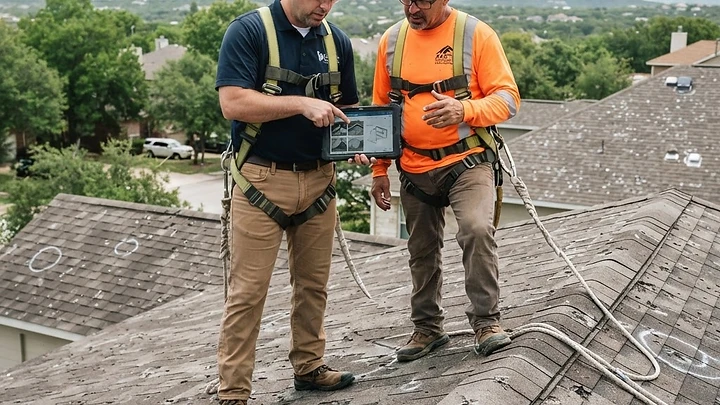
Filing an insurance claim for roof or exterior damage can feel like a black box. The adjuster shows up, walks your roof, writes a report, and you wait to find out if the claim is approved or denied.
After walking hundreds of Austin homeowners through this process, we've learned exactly what adjusters look for - and what gets claims approved versus denied. Here's what you need to know.
What Adjusters Are Trained to Find
Insurance adjusters are looking for objective evidence of storm damage. They're trained to identify:
Hail Strikes
Adjusters look for distinct, circular impact marks on shingles - dark spots where the granules have been knocked away and the mat is dented. They'll also check:
- Metal surfaces for dents - vent caps, flashing, pipe boots, skylight frames. Dented metal is clear evidence of hail impact and helps establish hail size.
- Gutters and downspout exits for granule accumulation - excessive granules indicate shingle damage.
- Directionality - hail typically comes from one direction, so damage will be concentrated on the slopes facing that direction.
Wind Damage
Adjusters look for:
- Lifted or creased shingle tabs - a crease in the shingle means it was lifted by wind and folded back, even if it's currently laying flat.
- Missing shingles - obvious, but they'll check if the pattern is consistent with wind direction.
- Exposed nail heads - if nails have backed out, wind may have been working the shingle loose.
Water Damage and Leaks
If you're filing for water damage, the adjuster will look for:
- The entry point - where water is actually getting in, where the stain appears on the ceiling.
- Whether the damage is from a covered event (storm) or a maintenance issue (old roof failing).
- How long the damage has been present - insurance covers sudden damage.
What Gets Claims Denied
Understanding why claims get denied is just as important as knowing what gets them approved. The most common denial reasons are:
"Wear and Tear, Not Storm Damage"
This is the #1 denial reason. If your shingles are old, curling, and losing granules, the adjuster may conclude that the damage is from age.
How to counter it: Have a contractor document the specific storm evidence - hail strikes, dented metal, creased tabs - separate from the general condition of the roof. Drone photos with timestamps help establish that the damage appeared after a specific storm event.
"No Damage Found"
Sometimes the adjuster simply doesn't find the damage. This can happen when:
- The inspection is rushed (15 minutes on the roof)
- The adjuster doesn't walk every slope
- Hail bruises are subtle and not visible from a standing position
How to counter it: Have your contractor present during the inspection. They can point out damage that the adjuster might miss and ensure every slope is walked. If the claim is still denied, request a re-inspection with your contractor present.
"Pre-Existing Damage"
If the adjuster believes the damage existed before the storm, they'll deny the claim. This is common when:
- There are old ceiling stains that predate the storm
- The roof has been patched repeatedly
- There's rot in the decking that took years to develop
How to counter it: Documentation is key. If you have photos of your roof from before the storm showing it was in good condition, that's strong evidence. A pre-storm inspection report from a contractor is even better.
"Filing Too Late"
Most policies require claims within one year of the damaging event, but some have shorter windows. If you wait too long, the claim will be denied regardless of the damage.
How to counter it: File as soon as you discover the damage. Don't wait to see if it gets worse.
How to Maximize Your Claim Approval
1. Get a Contractor Inspection Before Filing
The most important step. A contractor who works with insurance claims will:
- Document all damage with drone photos
- Identify whether the damage is from a covered event
- Provide a written report you can include with your claim
- Meet the adjuster on site to advocate for the full scope
2. Document Everything
Take your own photos of:
- The storm itself (if safe to do so)
- Ground-level damage immediately after the storm
- Interior stains or water intrusion
- Any dented metal on the property (mailbox, AC unit, vent caps)
Keep a file with dates, photos, and notes about what you observed.
3. Be Present for the Inspection
You have the right to be present when the adjuster inspects your roof, and you should be. Bring your contractor. Walk the roof together, ask questions, and make sure every slope is inspected.
4. Review the Scope Carefully
When the insurance company sends the approved scope and estimate, review it line by line with your contractor. Make sure it covers:
- Full tear-off (not just an overlay)
- New underlayment, not reuse of old
- New flashing, drip edge, and pipe boots
- Decking replacement if there's rot
- Disposal of old materials
If anything is missing, your contractor can file a supplement. This is a standard part of the process - adjusters sometimes miss items, and supplements are how those gaps get filled.
5. Understand Your Deductible
In Texas, many policies have a separate wind/hail deductible that's calculated as a percentage of your dwelling coverage (typically 1-2%). On a $400,000 home with a 2% deductible, your out-of-pocket cost is $8,000.
Know your deductible before filing. If the cost of repairs is close to or below your deductible, it may not be worth filing - a claim on your record with no payout can still affect your premiums.
6. Don't Accept the First Denial
If your claim is denied, you have options:
- Request a re-inspection with your contractor present
- File a complaint with the Texas Department of Insurance
- Hire a public adjuster to represent your interests
- Consult an attorney who specializes in insurance claims
Many denials are overturned on re-inspection, especially when a contractor is present to point out damage the first adjuster missed.
The Bottom Line
Insurance adjusters are looking for objective, documented evidence of storm damage. The homeowners who get their claims approved are the ones who:
- Have a contractor inspect the roof before filing
- Document the damage with photos and written reports
- Have their contractor present during the adjuster inspection
- Review the scope carefully and file supplements if needed
- Understand their policy and deductible
We've walked hundreds of Austin homeowners through this process. If you think you have storm damage, call us for a free inspection before you file - we'll tell you whether the damage is worth claiming and help you document it properly.