roofing
Metal vs. Composition Roofing: Which Is Best for Central Texas?
Nighthawk Crew · Apr 20, 2025

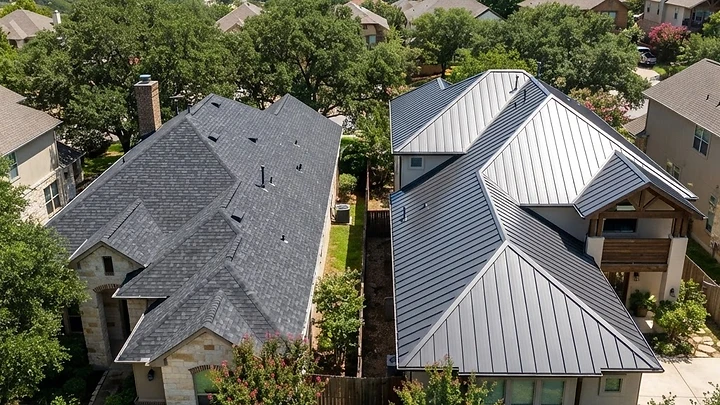
If you're replacing a roof in Austin, you're probably choosing between two options: architectural composition shingles or standing-seam metal. Both are popular in Central Texas, but they serve different budgets, priorities, and home styles.
Here's the honest breakdown from the crew that installs both.
Composition Shingles: The Workhorse
Architectural shingles (also called dimensional or laminated shingles) are the most common roof covering in Austin. They're what you see on most homes in the suburbs and most production builds across the metro.
The Pros
- Lower upfront cost - typically $8,000 to $18,000 for a full replacement on a standard single-family home
- Fast installation - most homes are done in one to two days
- Good wind rating - up to 130 mph with proper installation
- Insurance discounts available - Class 4 impact-rated shingles can lower your premium
- Wide color selection - easy to match any home style
- Manufacturer system warranty - up to 50 years when all components are installed by a certified contractor
The Cons
- Shorter lifespan than metal - 20 to 30 years in Central Texas sun
- Granule loss over time - the protective coating wears off, especially on south-facing slopes
- Hail can bruise the mat - even Class 4 shingles can show impact damage from large hail, though they resist cracking
- Heat absorption - darker colors absorb heat, which can raise attic temperatures
Best For
Composition shingles are the right choice for most Austin homeowners. They offer the best balance of cost, performance, and warranty for homes in the $300K to $700K range. If you plan to sell within 10 to 15 years, a quality architectural shingle gives you a roof that will pass inspection without overinvesting.
Standing-Seam Metal: The Long Game
Standing-seam metal roofs are gaining popularity in Austin, especially in the Hill Country and on modern builds. They use 24-gauge steel panels with hidden fasteners and a Kynar finish.
The Pros
- Exceptional lifespan - 40 to 60+ years with minimal maintenance
- Hail resistance - metal sheds hail that would bruise a shingle (though large hail can dent the panels)
- Fire resistance - Class A fire rating, which can lower insurance premiums
- UV reflection - the Kynar finish reflects heat, keeping attics cooler
- No granules to lose - the finish is bonded to the metal, not sprinkled on top
- Wind rating - up to 140 mph with proper clip spacing
- Sheds debris - pine needles and oak leaves slide off instead of collecting in valleys
The Cons
- Higher upfront cost - typically 2 to 3 times the cost of composition shingles
- Longer installation - 2 to 4 days depending on roof complexity
- Denting from large hail - while metal resists cracking, very large hail (2+ inches) can dent the panels
- Aesthetic considerations - not every home style or HOA allows metal roofing
- Noise - modern installation with solid decking and underlayment minimizes this, but metal is slightly louder in heavy rain
Best For
Standing-seam metal is the right choice for homeowners who plan to stay in their home for 20+ years and want a roof that will outlast everything else on the block. It's especially popular on:
- Hill country homes with steep pitches and wind exposure
- Modern builds where the roof is a design feature
- Homes under heavy tree canopy where debris collection is a problem
- Homes in high-fire-risk areas where the Class A rating matters
The Hail Question
This is the question every Austin homeowner asks: which roof handles hail better?
Composition shingles: Class 4 impact-rated shingles are designed to resist cracking from hail impact. They can still bruise (the mat dents under the granules), but they won't crack and leak. After a hailstorm, you may need to file a claim, but the roof will still be functioning.
Standing-seam metal: Metal sheds hail that would bruise a shingle. Small to medium hail bounces off without leaving a mark. However, very large hail (2+ inches) can dent the panels. The dents don't affect the roof's ability to shed water, but they're visible.
The honest answer: If hail is your primary concern, Class 4 shingles give you the best value with an insurance discount. Metal gives you the longest lifespan and the best overall durability, but at a higher upfront cost.
The Cost Comparison
| Factor | Composition Shingles | Standing-Seam Metal |
|---|---|---|
| Upfront cost | $8,000–$18,000 | $18,000–$40,000+ |
| Lifespan | 20–30 years | 40–60+ years |
| Annual cost over lifespan | ~$400–$600/yr | ~$450–$650/yr |
| Hail resistance | Good (Class 4) | Excellent |
| Insurance discount | Yes (Class 4) | Yes (Class A fire) |
| Maintenance | None | None |
When you amortize the cost over the lifespan, metal and composition are closer than they seem. The difference is upfront: metal requires a bigger investment today, but you may never replace it again.
Which Should You Choose?
There's no wrong answer - it depends on your budget, your home, and how long you plan to stay.
- Choose composition if you want the best value, a fast installation, and a roof that will serve you well for 20+ years.
- Choose metal if you want the last roof you'll ever put on the house, maximum hail resistance, and a modern look that adds resale value.
We install both, and we'll bring samples to your free inspection so you can see and feel the difference before you decide.