roofing
Roof Financing in Austin: How to Fund a Replacement Without Waiting
Nighthawk Crew · May 5, 2025
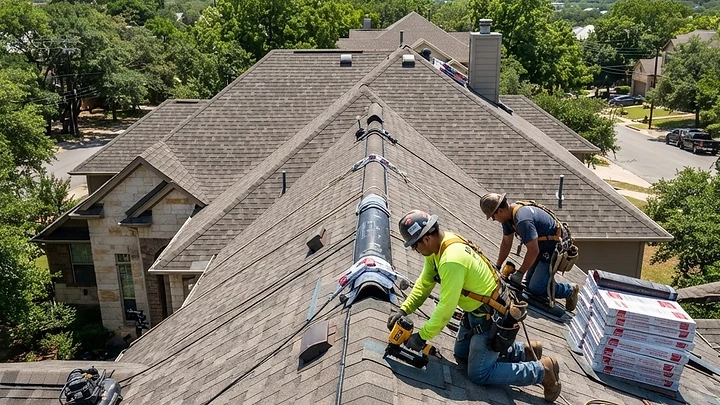
A roof replacement is one of the largest home maintenance expenses an Austin homeowner will face. With costs typically ranging from $8,000 to $18,000 for a shingle replacement (and more for metal), it's not an expense most people have sitting in savings.
But a failing roof doesn't wait. Every storm that hits a compromised roof risks water damage that costs more than the roof itself. Here's how to fund a replacement when you need it done now.
Why You Shouldn't Wait
First, let's talk about why delaying a needed roof replacement is risky:
- Water damage escalates fast. A small leak today can mean rotted decking, mold, and damaged insulation within months.
- Insurance may not cover gradual damage. If your roof is failing from age and you wait too long, insurance may classify the damage as a maintenance issue rather than a covered event.
- Storm season doesn't wait. A roof that's barely holding on in March may fail completely when a May hailstorm hits.
- Repairs add up. Spending $500-800 on repeated repairs for a roof that needs replacement is money that could have gone toward the new roof.
Option 1: Insurance (If You Have Storm Damage)
If your roof has hail or wind damage from a covered storm event, your homeowner's insurance may pay for the replacement minus your deductible. This is the best-case scenario - someone else is paying for most of the cost.
How it works:
- We inspect the roof and document the damage with drone photos
- You file a claim with your insurance company
- The adjuster inspects and approves the scope
- We meet the adjuster on site to make sure the full scope is covered
- You pay your deductible; insurance covers the rest
Key consideration: Know your wind/hail deductible. Many Texas policies have a separate deductible for wind/hail claims that's 1-2% of your dwelling coverage. On a $400,000 home, that's $4,000-$8,000 out of pocket.
Option 2: Contractor Financing Plans
Many roofing contractors, including us, offer financing plans specifically for roof replacements. These are typically unsecured personal loans or lines of credit with terms designed for home improvement projects.
How it works:
- You apply for financing during the estimate process
- Approval is usually quick (minutes to hours)
- You receive a credit limit based on your credit score and income
- You choose a repayment term (typically 12-84 months)
- The roof gets done now; you pay over time
Pros:
- Fast approval - don't have to wait weeks for a bank
- Flexible terms - choose a monthly payment that fits your budget
- No home equity required - it's an unsecured loan
- Can be combined with insurance (finance your deductible, pay the rest when insurance pays)
Cons:
- Interest rates vary based on credit score
- May have origination fees
- Shorter terms mean higher monthly payments
Best for: Homeowners who need a roof now, don't have enough savings, and either don't have storm damage or have a high deductible they need to finance.
Option 3: Home Equity Loan or HELOC
If you have equity in your home, a home equity loan or Home Equity Line of Credit (HELOC) can fund a roof replacement at a lower interest rate than unsecured financing.
Home Equity Loan:
- Lump sum disbursed upfront
- Fixed interest rate
- Fixed monthly payment
- Typical terms: 5-15 years
HELOC:
- Revolving line of credit (like a credit card)
- Variable interest rate
- Draw period (typically 10 years) followed by repayment period
- Only pay interest on what you borrow
Pros:
- Lower interest rates than unsecured loans
- Interest may be tax-deductible if used for home improvement (consult a tax advisor)
- Longer repayment terms
Cons:
- Requires home equity (typically need 15-20% equity after the loan)
- Your home is collateral - if you default, you risk foreclosure
- Slower approval process (weeks, not days)
- Appraisal and closing costs may apply
Best for: Homeowners with significant equity who want the lowest possible interest rate and have time to wait for approval.
Option 4: Credit Cards
For smaller repairs or partial payments, a credit card can bridge the gap. But this is generally the most expensive option due to high interest rates.
Best for: Covering a deductible or a small repair that you can pay off within a few months. Not recommended for a full roof replacement.
Option 5: FHA Title I Home Improvement Loan
If you don't have enough equity for a home equity loan, the FHA Title I program offers government-insured loans for home improvements, including roof replacement.
Pros:
- Available to homeowners with limited equity
- Fixed interest rate
- Terms up to 20 years
Cons:
- Loan limits ($25,000 for single-family homes)
- Requires an FHA-approved lender
- May have stricter credit requirements
Option 6: Property Assessed Clean Energy (PACE) Financing
Texas offers PACE financing for energy-efficient home improvements, which can include cool roofs (reflective roofing that reduces energy costs). This is a specialized option that may not apply to all roof replacements.
How it works:
- The loan is attached to the property, not the owner
- Repayment is made through your property tax bill
- Long terms (up to 20 years)
Check availability: PACE programs vary by county and may not be available in all parts of the Austin metro.
How to Choose the Right Option
| Situation | Best Option |
|---|---|
| Storm damage confirmed | Insurance (pay deductible only) |
| Storm damage + high deductible | Insurance + contractor financing for deductible |
| No storm damage, need roof now, good credit | Contractor financing plan |
| No storm damage, have equity, want low rate | Home equity loan or HELOC |
| No storm damage, limited equity | FHA Title I loan |
| Small repair needed quickly | Credit card (if you can pay it off fast) |
Questions to Ask Before Financing
Before signing any financing agreement, ask:
- What's the interest rate? Is it fixed or variable?
- What's the total cost? Multiply the monthly payment by the number of months - that's the total you'll pay, including interest.
- Are there fees? Origination fees, prepayment penalties, late fees?
- What's the term? How long will you be paying?
- Can I pay it off early? Is there a prepayment penalty?
- What happens if I sell the house? Some loans are assumable; others require payoff at sale.
Combine Insurance and Financing
Many Austin homeowners use a combination: insurance covers the bulk of the replacement, and financing covers the deductible. This is a smart approach - you get the roof done now, insurance pays for most of it, and you finance the deductible over a manageable term.
Don't Let a Failing Roof Wait
If your roof is leaking, curling, or past its useful life, the cost of waiting is almost always higher than the cost of financing. Water damage, mold remediation, and repeated repairs add up fast - and they don't improve your home's value the way a new roof does.
Call us for a free inspection. We'll tell you whether the damage is worth an insurance claim, give you a fixed quote for the replacement, and walk you through the financing options that fit your situation. A new roof is an investment in your home's value and your family's comfort - and it shouldn't have to wait on savings to catch up.