roofing
Why Standing-Seam Metal Roofs Are Gaining Popularity in the Hill Country
Nighthawk Crew · Apr 1, 2025
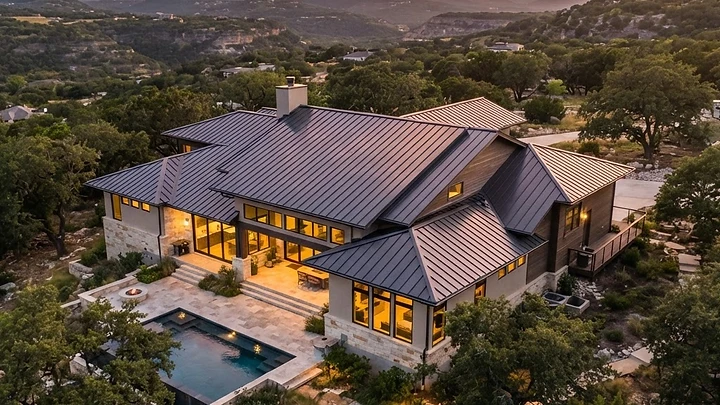
Drive through Bee Cave, Lakeway, or Dripping Springs and you'll notice a trend: more and more Hill Country homes are sporting standing-seam metal roofs. What was once a niche choice for modern builds has become a mainstream option for homeowners across the western Austin metro.
Here's why metal is gaining ground in the Hill Country - and whether it's the right choice for your home.
What Is Standing-Seam Metal Roofing?
Standing-seam metal roofing uses continuous panels of 24-gauge steel (or sometimes aluminum or zinc) that run from the ridge to the eave. The panels are connected by raised seams that are either mechanically fastened or snapped together, with no exposed screws or nails.
The panels are coated with a Kynar (PVDF) finish - a high-performance paint system that reflects UV, resists fading, and carries a 40-year warranty.
This is different from corrugated metal roofing (like you see on barns), which uses exposed screws that can back out and leak over time. Standing-seam has no exposed fasteners - the seams are either hidden or crimped shut.
Why Hill Country Homeowners Are Choosing Metal
1. Hail Resistance
The Hill Country sits squarely in Central Texas's hail corridor. Composition shingles, even Class 4 impact-rated ones, can bruise and lose granules in a hailstorm. Standing-seam metal sheds hail - the panels are rigid enough that normal hail bounces off without leaving a mark.
While very large hail (2+ inches) can dent metal panels, the dents don't affect the roof's ability to shed water. A dented metal roof still works; a bruised shingle roof may need replacement.
2. Wind Resistance
Hill Country homes on hillside lots and ridge lines take the full force of Central Texas winds. Standing-seam metal panels are rated for wind speeds up to 140 mph (and higher with proper clip spacing), compared to 130 mph for architectural shingles.
The panels are mechanically attached to the deck with clips that allow for thermal expansion and contraction - the panels expand and contract with temperature changes without pulling loose from the fasteners.
3. Debris Shedding
Hill Country homes are often surrounded by live oaks, cedar ( Ashe juniper), and pine trees. On a composition roof, leaves, needles, and twigs collect in the valleys and behind the chimney, causing water backup and rot.
Standing-seam metal is smooth and slick - debris slides off the surface instead of collecting. The raised seams channel water straight down the panel, and there are no granules to trap debris the way shingles do.
4. Fire Resistance
The Hill Country's dry summers and cedar ( Ashe juniper) growth create wildfire risk. Standing-seam metal carries a Class A fire rating - it won't ignite from embers or radiant heat.
This isn't just a safety benefit - it can also lower your homeowner's insurance premium. Some insurance companies offer discounts for Class A fire-rated roofing, especially in areas designated as wildfire risk zones.
5. Longevity
A composition shingle roof in Central Texas lasts 20-30 years. A standing-seam metal roof lasts 40-60+ years. For homeowners who plan to stay in their Hill Country home long-term, metal is likely the last roof they'll ever install.
The Kynar finish carries a 40-year warranty against fading, chalking, and cracking. The steel itself doesn't degrade - it doesn't lose granules, curl, or become brittle the way asphalt shingles do.
6. Energy Efficiency
The Kynar finish on standing-seam metal is a "cool roof" coating - it reflects a significant portion of solar radiation rather than absorbing it. This keeps the roof surface cooler, which reduces attic temperatures and lowers cooling costs.
In the Hill Country, where summer temperatures regularly exceed 100°F, the energy savings can be meaningful. Light-colored metal roofs can reduce attic temperatures by 20-30°F compared to dark composition shingles.
7. Aesthetic Appeal
Standing-seam metal has a clean, modern look that complements Hill Country architecture - especially the contemporary builds, barndominiums, and modern farmhouses that are popular in areas like Bee Cave and Dripping Springs.
The panels are available in a range of colors, from natural galvalume (silver) to deep bronze, charcoal, and forest green. The standing seams create clean vertical lines that draw the eye and complement the verticality of the Hill Country landscape.
The Trade-Offs
Standing-seam metal isn't the right choice for every home. Here are the considerations:
Cost
Metal roofing costs 2-3 times more than composition shingles upfront. A roof that would cost $12,000 in shingles might cost $25,000-$35,000 in standing-seam metal.
However, when you amortize the cost over the lifespan, the annual cost is similar:
- Shingles: $12,000 / 25 years = $480/year
- Metal: $30,000 / 50 years = $600/year
The difference is about $120/year - and that doesn't account for the energy savings, insurance discounts, and the avoided cost of a second shingle replacement at year 25.
Noise
Modern metal roofs installed over solid decking with synthetic underlayment are not significantly louder than shingle roofs in rain. The old stereotype of noisy metal roofs comes from metal installed directly over open framing (like a barn).
If you're particularly sensitive to rain noise, additional insulation in the attic or a sound-deadening underlayment can further reduce it.
Aesthetic Compatibility
Standing-seam metal has a distinctive look that doesn't suit every home style. It works well with:
- Modern and contemporary builds
- Hill Country ranches and barndominiums
- Modern farmhouses
- Homes where the roof is a design feature
It may not be appropriate for:
- Historic homes or historic districts with strict material guidelines
- Traditional colonial or Tudor-style homes
- Neighborhoods with HOA restrictions on roofing materials
Denting from Large Hail
While metal resists normal hail, very large hail (2+ inches) can dent the panels. The dents don't affect the roof's function - it still sheds water - but they're visible. If your area regularly experiences very large hail, this is a consideration.
Some homeowners choose a textured or ribbed panel profile that makes dents less visible. Others accept that a few dents are the trade-off for a roof that doesn't leak after a hailstorm.
Is Metal Right for Your Hill Country Home?
Standing-seam metal is an excellent choice for Hill Country homes if:
- You plan to stay in the home for 15+ years
- Your home has a steep pitch that's visible from the street
- You're in an area with hail, wind, or wildfire risk
- You want a roof that requires zero maintenance
- You're building new or doing a full replacement and want the best long-term option
It may not be the right choice if:
- You're planning to sell within 5-10 years (you won't recoup the premium cost)
- Your HOA or historic district doesn't allow metal roofing
- Your budget requires the lower upfront cost of composition shingles
- Your home's architectural style doesn't complement the metal aesthetic
The Installation Matters
A standing-seam metal roof is only as good as its installation. The panels must be:
- Custom-cut to the exact roof length (no field-cut seams)
- Installed with the proper clip spacing for wind resistance
- Flashing at all valleys, penetrations, and wall tie-ins must be designed for metal - not reused from the old shingle roof
- The ridge and eave details must be properly sealed and ventilated
We've installed standing-seam metal across the Hill Country - from Northwest Hills to Bee Cave to Dripping Springs to Lakeway. We custom-cut every panel, flash every transition, and stand behind the installation with a workmanship warranty.
See If Metal Is Right for Your Home
If you're considering a standing-seam metal roof for your Hill Country home, call us for a free inspection and estimate. We'll evaluate your roof, discuss whether metal makes sense for your situation, and bring material samples so you can see the colors and profiles in person.
Metal isn't the right choice for every home - but for the right home in the right location, it's the last roof you'll ever need.